

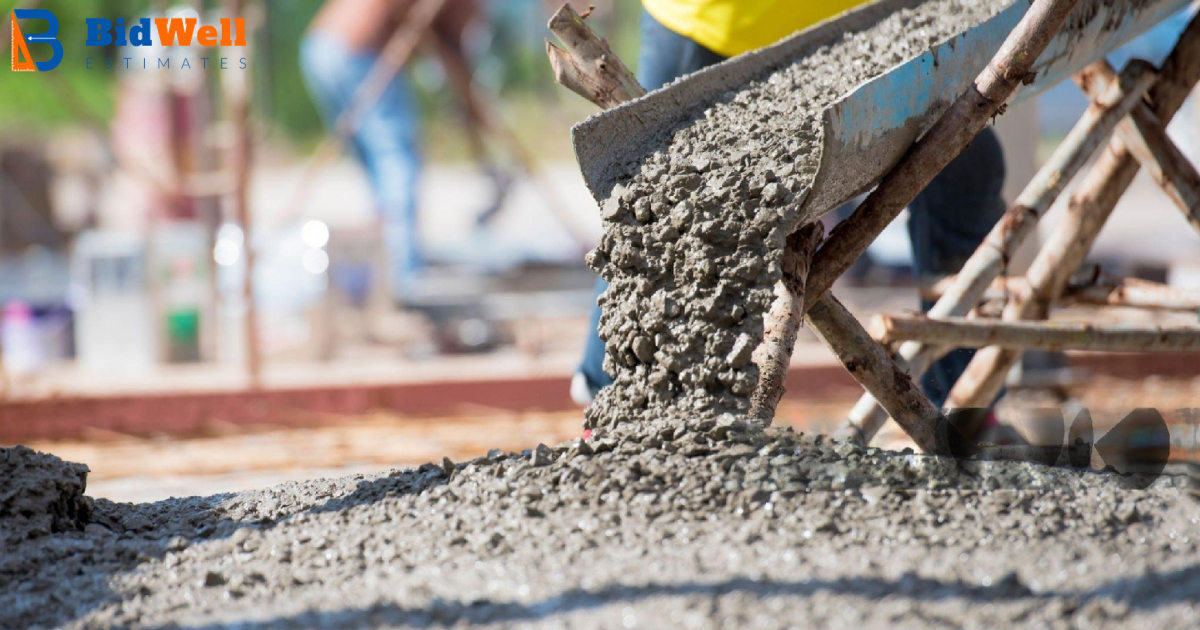
Are you embarking on a construction project and feeling overwhelmed by the technicalities of the concrete mix ratio? Look no further! This comprehensive guide will demystify the concept of concrete mix ratios, helping you achieve the perfect balance for your specific needs. Whether you’re a DIY enthusiast or a professional contractor, understanding the science behind concrete mixing is crucial for creating durable and high-quality structures.
What is a Concrete Mix Ratio?
A concrete mix ratio is the proportion of cement, sand (fine aggregate), and gravel (coarse aggregate) used to create a concrete mixture. The ratio is typically expressed in parts, with cement always being one part. For example, a common concrete mix ratio is 1:2:3, which means one part cement, two parts sand, and three parts gravel.
The Importance of Water in Concrete Mixing
While not typically included in the ratio, water plays a crucial role in the concrete mixing process. The amount of water added can significantly affect the strength and workability of the concrete. We’ll discuss the water-cement ratio in more detail later in this article.
Common Concrete Mix Ratios and Their Applications
Different concrete mix ratios are used for various applications, depending on the required strength and durability. Here’s a table showcasing some common ratios and their typical uses:
| Mix Ratio (Cement:Sand:Gravel) | Strength | Common Applications |
| 1:2:3 | Medium | Driveways, sidewalks, patios |
| 1:3:3 | Standard | General construction, foundations |
| 1:2:4 | High | Load-bearing structures, columns |
| 1:3:5 | Low | Non-structural uses, mass concrete |
| 1:1:2 | Very High | Precast concrete, high-strength
applications |
Mix Ratios for Specific Projects (Slabs, Footings, Foundations, Driveways, and Patios)
The right mix ratio often depends less on a general strength category and more on exactly what you’re building. Here’s how the ratios above apply to common project types:
- Concrete slab mix ratio: A 1:2:3 or 1:2:4 mix is typically used for concrete slabs, offering a strong, crack-resistant surface for floors and patios.
- Concrete mix ratio for foundations and footings: Foundations and footings usually call for a 1:3:3 mix, providing the standard strength needed to support structural loads while remaining cost-effective.
- Driveway concrete mix ratio: A 1:2:3 mix is the standard driveway concrete mix ratio, balancing strength and workability for a surface that must withstand vehicle traffic and weather exposure.
- Concrete mix ratio for posts and fence footings: A 1:2:3 or slightly richer 1:2:2 mix is common for setting posts, since quick strength gain around the post base improves stability.
- Path, patio, and pond mix ratios: Lighter-duty applications like garden paths or pond bases can often use a 1:2:4 mix, while decorative patios generally follow the same 1:2:3 ratio used for driveways.
Note: Local building codes and soil/load conditions can affect the ideal ratio for foundations and footings, so it’s worth confirming project-specific requirements with a structural engineer for anything load-bearing.
Factors Affecting Concrete Mix Ratios
Several factors influence the choice of concrete mix ratio:
- Strength requirements: Higher cement content generally results in stronger concrete.
- Workability: The ease with which fresh concrete can be mixed, placed, and finished.
- Durability: Resistance to weathering, chemical attack, and abrasion.
- Cost: Higher cement content increases the cost of the mix.
- Environmental conditions: Climate and exposure to elements can affect the ideal mix ratio.
The Role of Aggregates in Concrete Mixing
Aggregates play a crucial role in concrete mixing, comprising about 60-75% of the total volume. Let’s explore the two main types of aggregates:
Fine Aggregate (Sand)
Fine aggregate consists of small particles, typically less than 4.75mm in size. It fills the voids between coarse aggregates and contributes to the workability and strength of the concrete.
Coarse Aggregate (Gravel or Crushed Stone)
Coarse aggregate includes particles larger than 4.75mm. It provides bulk and strength to the concrete mixture. The size and shape of coarse aggregate can affect the concrete’s properties.
The Water-Cement Ratio: A Critical Factor
The water-cement ratio is a crucial aspect of concrete mixing that significantly impacts the strength and durability of the final product. It’s expressed as the weight of water divided by the weight of cement in the mix.
Importance of the Water-Cement Ratio
- Strength: Lower water-cement ratios generally result in stronger concrete.
- Workability: Higher ratios increase workability but may decrease strength.
- Durability: Lower ratios typically lead to more durable concrete.
Recommended Water-Cement Ratios
| Water-Cement Ratio | Concrete Strength | Typical Applications |
| 0.40 – 0.45 | High strength | Bridges, high-rise buildings |
| 0.45 – 0.50 | Medium strength | General construction |
| 0.50 – 0.60 | Standard strength | Residential projects |
| 0.60 – 0.70 | Low strength | Mass concrete, non-structural uses |
Calculating Material Quantities for Your Project
To determine the amount of materials needed for your concrete project, you’ll need to calculate the volume of concrete required. Here’s a step-by-step guide:
- Measure the dimensions of your project area (length, width, and depth).
- Calculate the volume in cubic meters or cubic yards.
- Add 5-10% to account for potential wastage.
- Use the chosen mix ratio to determine the proportions of cement, sand, and gravel.
Example Calculation for 1 Cubic Meter of Concrete
Let’s assume we’re using a 1:2:3 mix ratio for a project requiring 1 cubic meter of concrete:
- Cement: 1 part = 14% of the total volume ≈ of 0.14 cubic meters
- Sand: 2 parts = 28% of the total volume ≈ of 0.28 cubic meters
- Gravel: 3 parts = 42% of the total volume ≈ of 0.42 cubic meters
- Water: Approximately 16% of the total volume ≈ of 0.16 cubic meters
Note: The actual amount of water may vary depending on the moisture content of the aggregates and the desired workability.
Understanding Concrete Grades and Mix Ratios (M-Grades and C-Grades)
Beyond simple part-based ratios like 1:2:3, concrete is also classified by “grade,” a system that tells you its characteristic compressive strength.
In the metric/Indian system, grades are labeled M followed by a number representing the 28-day compressive strength in N/mm² (e.g., M15, M20, M25). In the UK and parts of Europe, the equivalent system uses “C” grades (e.g., C25, C30, C35, C40, C50), which refer to the cylinder/cube strength in megapascals (MPa).
| Grade | Approx. Mix Ratio (Cement:Sand:Gravel) | Typical Use |
| M15 / C15 | 1:2:4 | Non-structural work, mass concrete |
| M20 / C20 | 1:1.5:3 | Residential slabs, footings |
| M25 / C25 | 1:1:2 | Structural beams, columns |
| C35 | Design mix (higher cement content) | Heavy-duty floors, commercial foundations |
| C50 | Design mix (very high cement content) | High-rise structures, precast elements |
Higher grades like C35 and C50 typically move away from simple nominal ratios and use “design mixes,” where proportions are calculated in a lab to hit an exact target strength; this is common for structural or commercial projects rather than DIY work.
PCC, PPC, and Ready-Mix Concrete
A few related terms are worth clarifying, since they often come up alongside mix ratios:
PCC (Plain Cement Concrete) ratio: PCC refers to concrete without steel reinforcement, commonly used as a leveling or base layer beneath foundations, floors, or footings. A typical PCC ratio is 1:4:8 (cement:sand:gravel), which is leaner than structural mixes since it isn’t load-bearing in the same way.
PPC (Portland Pozzolana Cement) ratio: PPC is a type of cement (not a mix ratio itself) that blends Portland cement with pozzolanic materials like fly ash. It’s commonly substituted at the same mix ratios as ordinary Portland cement (OPC) but offers better workability and durability in certain conditions, such as mass concreting or exposure to sulfates.
Ready-mix concrete (RMC): Ready-mix concrete is batched at a plant to a specified ratio and delivered to the site by truck, rather than being mixed on-site. It offers more consistent quality control than hand-mixed or “builders mix” concrete, and is generally preferred for larger pours where consistency and timing matter.
UK Concrete Mix Ratios: Ballast and Builders Mix
In the UK, concrete recipes are often described using “ballast” (a pre-blended combination of sand and gravel) rather than listing sand and gravel separately.
Standard UK concrete mix ratio: 1 part cement to 5 parts ballast is a common general-purpose mix, roughly equivalent to a 1:2:3 cement:sand:gravel ratio.
Builders mix ratio: “Builders mix” refers to a pre-combined sand and aggregate blend sold specifically for general construction use. A typical builder’s mix to cement ratio is 1:6 for foundations and 1:5 for driveways or floor slabs.
Ballast to cement ratio for foundations: For foundations, a richer mix of 1 part cement to 4 parts ballast is often recommended to provide extra strength for load-bearing work.
Tips for Achieving the Perfect Concrete Mix
- Use clean materials: Ensure all aggregates are free from impurities that could affect the concrete’s strength.
- Measure accurately: Use proper measuring tools to maintain consistent ratios.
- Mix thoroughly: Ensure all components are well-blended for uniform consistency.
- Add water gradually: Start with less water and add more as needed to achieve the desired consistency.
- Consider admixtures: Chemical additives can enhance specific properties of the concrete.
- Test the mix: Perform slump tests to check workability and make adjustments as necessary.
Mastering the Art of Concrete Mixing
Understanding concrete mix ratios is essential for achieving the perfect balance of strength, durability, and workability in your construction projects. By considering factors such as the type of application, environmental conditions, and material properties, you can select the ideal mix ratio for your specific needs.
Remember that while guidelines and ratios provide a solid starting point, concrete mixing is both a science and an art. Don’t hesitate to consult with experienced professionals of BidWell Estimates or conduct small-scale tests to fine-tune your mix for optimal results.
With the knowledge gained from this guide, you can tackle your concrete projects with confidence. Happy mixing!
FAQs
What is the most common concrete mix ratio for general construction?
For general construction, the most common concrete mix ratio is 1:2:3, which means 1 part cement, 2 parts sand (fine aggregate), and the third part gravel (coarse aggregate). These things help maintain a better balance in the strength and workability of the concrete mix ratio and provide a wide range of applications, such as driveways, sidewalks, and foundations, but the ideal ratio may be different for each project.
How does water cement ratio affect concrete strength?
The ratio of water and cement determines the strength of the material; generally, less or more cement and water can affect the strength of the concrete mix ratio. A water-cement ratio of 0.40 to 0.45 is considered for strength, and this concrete mix ratio is ideal for every construction project.
How many bags of cement are required for 1 cubic meter of concrete?
It depends on your usage; if you try to use a concrete mix ratio, the standard 1:2:3 concrete mix ratio is considered ideal. You will require approximately 9 to 10 bags of cement (assuming 50kg bags) for one cubic meter of concrete mix ratio
How can I adjust the concrete mix ratio for extreme weather conditions?
For extreme weather conditions, you need to adjust the concrete mix ratio because proper curing and strength loss can happen, so during the hot season, you can use a little more cement than routine can slightly reduce the amount of water so that the strength of the concrete mix ratio remains intact and is no quick drying, In cold weather, you may have to add more cement to generate more heat during the curing process.
What is the difference between fine aggregate and coarse aggregate in concrete mix?
In concrete mix ratio, fine aggregate usually refers to sand, and coarse aggregate refers to gravel or crushed stone, particles of fine aggregate usually refer to 4.75mm as small hot and particles of coarse aggregate refer to fine aggregate as big hot, and fine aggregates increase the middle space of coarse aggregates or contribute to the workability of concrete mix ratio.
What percentage of a concrete mix is cement?
Cement typically makes up around 10-15% of a concrete mix by volume, with the exact figure depending on the ratio used. In a standard 1:2:3 mix, cement accounts for about 14% of the total volume, while sand makes up roughly 28% and gravel about 42%, with the remainder made up of water and air voids.
What is the mix ratio for 3000 PSI and 4000 PSI concrete?
3000 PSI concrete, a common standard for residential slabs and driveways, generally corresponds to a mix ratio of about 1:2.5:3.5 to 1:3:3, roughly matching a water-cement ratio of 0.5-0.6. 4000 PSI concrete, used for garages, driveways in colder climates, and structural elements, typically uses a richer ratio of around 1:2:3, with a lower water-cement ratio near 0.45-0.50 for added strength.
Is dry-pouring concrete a good method?
Dry pouring, or “dry pouring” a bag of concrete mixed directly into a hole and letting groundwater and rain hydrate it over time, is sometimes used for setting fence posts. It saves time and labor, but generally results in lower, less consistent strength than properly mixed and poured concrete, since hydration isn’t controlled. It’s best reserved for light-duty, non-structural applications like fence posts, rather than load-bearing work.
What’s the difference between ready-mix concrete and site-mixed (hand-mixed) concrete?
Ready-mix concrete is batched at a plant to a precise, quality-controlled ratio and delivered by truck, making it well-suited for larger or structural pours. Site-mixed (or “builders mix”) concrete is combined by hand or with a mixer on location, which offers more flexibility and lower cost for small DIY jobs but relies more heavily on accurate manual measuring to hit the intended ratio.
Which cement grade is best for house construction?
For most residential construction, OPC (Ordinary Portland Cement) grade 43 is a widely used, versatile choice, offering a good balance of strength and workability for foundations, slabs, and general structural work. Grade 53 OPC, which has a higher strength and faster setting time, is often preferred for structural elements like columns and beams where higher early strength is needed.