

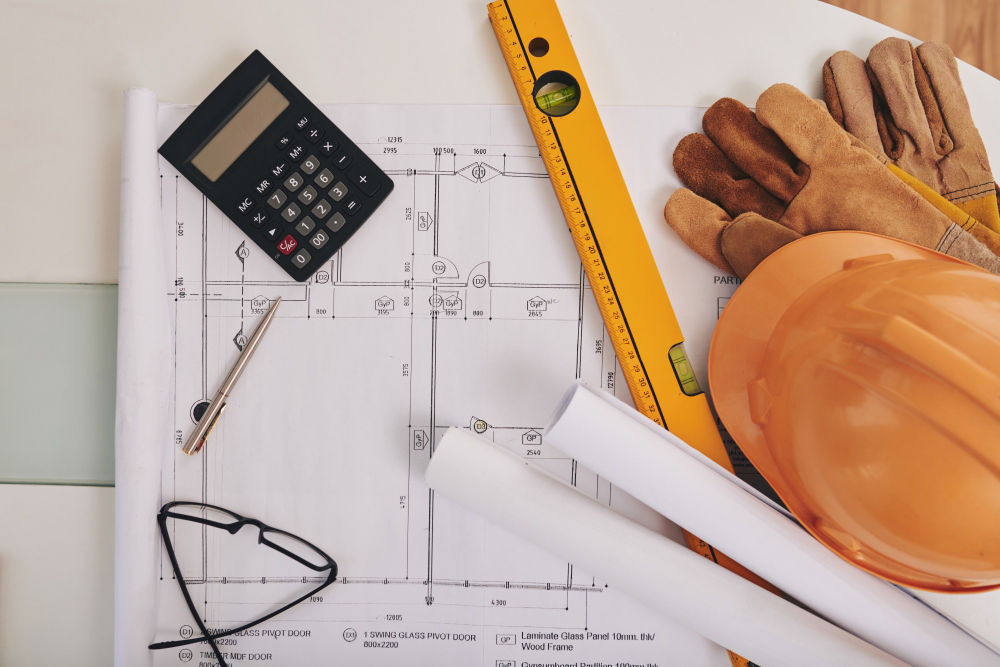
In today’s competitive construction industry, precise budgeting is critical for project success. Construction Cost Estimating Services provide contractors, project managers, and developers with accurate insights into material, labor, and overhead costs. By understanding and applying step-by-step calculation methods, businesses can reduce financial risk, submit competitive bids, and ensure timely project delivery. At Bidwell Estimates, we offer reliable and trustworthy estimating services tailored to your project needs.
Why Construction Cost Estimating Services Matter
Accurate cost estimation is the backbone of any construction project. Without it, projects can quickly exceed budget, causing delays and client dissatisfaction. Professional estimating services help you:
- Reduce unexpected expenses: Identify potential cost overruns before construction begins.
- Improve bid accuracy: Win more projects by submitting competitive yet profitable bids.
- Enhance decision-making: Make informed choices on materials, labor allocation, and project sequencing.
- Build client trust: Transparent estimates demonstrate professionalism and reliability.
Partnering with Bidwell Estimates, a trusted name in construction estimating, ensures that your projects benefit from accurate, data-driven insights.
Gathering Project Information
The foundation of reliable cost estimation begins with collecting detailed project data. This includes:
- Architectural and engineering plans: Blueprint dimensions, material specifications, and design details.
- Site information: Location, soil type, accessibility, and local regulations.
- Historical cost data: Previous project costs for similar structures.
- Labor and material rates: Current local market prices and wage trends.
Having complete and accurate data is essential for creating precise cost estimates and avoiding surprises later in the project.
Breaking Down the Project Scope
Once all project information is collected, the next step is to define the project scope. This involves:
- Dividing the project into work packages: Example: foundation, framing, electrical, plumbing, and finishing.
- Identifying materials and labor for each package: Determine quantities, quality, and skill level required.
- Assigning timelines: Estimate how long each work package will take.
This step ensures that every aspect of the project is accounted for, improving the accuracy of your overall estimate.
Selecting the Estimation Method
There are several methods used in Construction Cost Estimating Services, each suited to different project types and stages:
- Unit Cost Estimating: Calculates costs based on unit measurements (e.g., per square foot, per cubic yard). Ideal for projects with repetitive elements like commercial buildings.
- Detailed or Elemental Estimating: Breaks down each component of the project with precise material and labor costs. Best for complex or large-scale projects.
- Parametric Estimating: Uses historical data and statistical models to predict costs for projects with similar parameters.
- Top-Down Estimating: Provides a quick, overall project budget based on high-level data, useful in early planning stages.
Choosing the right method depends on project complexity, available data, and the level of accuracy required. Bidwell Estimates specializes in combining methods for maximum precision.
Calculating Material Costs
Material costs often make up a significant portion of a construction budget. Accurate calculation involves:
- Listing all required materials for each work package.
- Obtaining current market prices from suppliers.
- Accounting for waste, delivery, and storage costs.
- Considering alternative materials if cost savings are possible without compromising quality.
Example: For a concrete foundation, calculate total cubic yards needed, multiply by the per-yard cost, then add delivery and extra for waste.
Estimating Labor Costs
Labor is another major expense in construction. Effective estimation includes:
- Identifying required skill levels for each task.
- Calculating hours based on project scope and productivity rates.
- Applying current wage rates and benefits.
- Considering overtime, shift differentials, and seasonal labor variations.
Accurate labor estimation prevents project delays and ensures fair compensation for workers.
Adding Overhead and Contingencies
Beyond materials and labor, projects include indirect costs:
- Overhead: Site management, insurance, utilities, equipment rental, and administrative costs.
- Contingencies: A percentage (typically 5–10%) to cover unexpected expenses.
Including these costs provides a realistic budget and protects against financial surprises.
Compiling and Reviewing the Estimate
After calculating materials, labor, and overhead, compile the estimate into a clear, organized report. Key steps include:
- Reviewing each line item for accuracy.
- Comparing with historical data or industry benchmarks.
- Highlighting areas of uncertainty.
- Providing a summary that is easy for stakeholders to understand.
Professional services like Bidwell Estimates ensure that all calculations are verified, transparent, and actionable.
Updating and Adjusting Estimates
Construction projects are constantly evolving, and costs can shift as designs, materials, or labor rates change. Continuously reviewing and updating your estimates allows you to:
- Adjust seamlessly to design modifications.
- Stay aligned with market fluctuations in materials and labor.
- Keep project budgets accurate and transparent for all stakeholders.
By partnering with a reliable estimating service like Bidwell Estimates, you gain ongoing insight and control throughout the project, ensuring every decision is backed by precise, up-to-date data.
FAQs
1. What are Construction Cost Estimating Services?
Construction Cost Estimating Services are professional assessments of all costs involved in a construction project, including materials, labor, overhead, and contingencies, to create accurate project budgets.
2. How do you calculate construction costs step by step?
Start by gathering project data, defining the scope, selecting an estimation method, calculating materials and labor costs, adding overhead, compiling the estimate, and updating it as needed.
3. Why is accurate construction estimating important?
Accurate estimates prevent budget overruns, ensure competitive bids, improve planning, and build client trust, ultimately reducing financial risks.
4. Can I trust Bidwell Estimates for my project?
Yes, Bidwell Estimates is known for providing highly reliable and transparent Construction Cost Estimating Services, ensuring trustworthy, data-driven results for all project sizes.
5. What methods are used in Construction Cost Estimating Services?
Common methods include unit cost estimating, detailed/elemental estimating, parametric estimating, and top-down estimating, each chosen based on project complexity and data availability.